Defining the Deep Web and Surface Web
The surface web is what you use every day: Google search results, Wikipedia, news sites, social media feeds. It represents roughly 4 to 5 percent of the total internet. Everything else is the deep web. This includes password-protected content like your bank account, email, Netflix library, medical portals, and academic databases. It also includes private corporate networks, legal documents in court filing systems, and subscription-based research journals. The deep web exists not because it is hidden for nefarious purposes, but because it requires authentication or is simply not designed to be indexed by search engine crawlers. Your doctor's office database is part of the deep web. So is your employer's internal file server. These systems are private by design, not by deception.
How the Dark Web Fits Into the Larger Picture
The dark web is a deliberately anonymized network built on top of the internet infrastructure. It is accessed through software like Tor, which routes your traffic through multiple encrypted relays to obscure your location and identity. The dark web represents a tiny fraction of the deep web, perhaps 0.01 percent or less. What makes it distinct is not the content alone, but the technical architecture: onion services are designed so that neither the user nor the server can easily identify each other. This anonymity has legitimate uses. Journalists use Tor to communicate with sources in countries with censorship. Activists organize political movements. Ordinary people protect their privacy from surveillance. But the same anonymity also attracts illegal marketplaces, forums for stolen data, and other criminal activity. The technical capability does not determine the use; people do.
Clear Web, Deep Web, Dark Web: The Layered Model
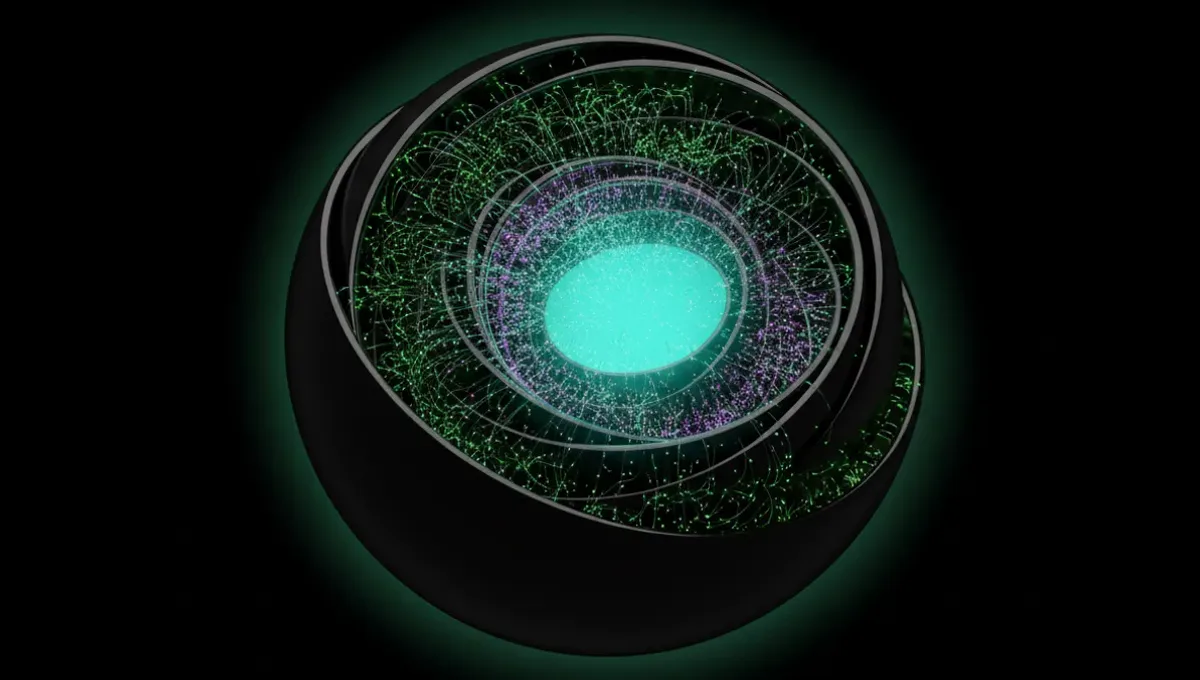
Think of the internet in three layers. The clear web (or surface web) is the visible layer you navigate with a standard browser. The deep web is the much larger layer beneath it, containing legitimate private content that simply requires login credentials or is not meant for public indexing. The dark web is the smallest layer, deliberately obscured and requiring specialized access tools. A helpful way to remember this: all dark web content is part of the deep web, but not all deep web content is dark web. Your Gmail account is deep web, not dark web. A Tor-hosted forum is both deep web and dark web. A government database is deep web but not dark web. This hierarchy matters because it prevents confusion about what you are actually accessing and why. Many people fear the deep web because they conflate it with the dark web, when in reality most of the deep web is mundane and essential to how the internet functions.
Why This Distinction Matters for Your Safety
Conflating the deep web with the dark web leads to poor security decisions. If you believe your email is on the dark web, you might take unnecessary precautions or, conversely, become complacent about password strength. In reality, your email is on the deep web but protected by your login credentials and your email provider's security infrastructure. The risks are different for each layer. On the surface web, your main concerns are phishing, malware in ads, and data collection by advertisers. On the deep web, the risks depend on the service: a bank portal is as secure as the bank makes it; a poorly maintained corporate database might leak credentials. On the dark web, risks include law enforcement monitoring of illegal marketplaces, phishing clones of legitimate onion services, malware-laden downloads, and scams by vendors who know they can disappear without consequence. Understanding which layer you are on helps you calibrate your threat model and response.
Reality Check: How These Layers Actually Behave
According to Tor Project documentation, the Tor network has roughly two million daily users, and the vast majority use it for legitimate privacy reasons: accessing information in censored regions, protecting against surveillance, and maintaining anonymity. However, law enforcement agencies worldwide actively monitor dark web marketplaces and forums. Court records from prosecutions of dark web operators show that while Tor provides strong anonymity, it is not absolute; investigators have successfully de-anonymized users through traffic analysis, operational security mistakes, and cooperation from hosting providers. Security vendor incident reports consistently show that the dark web hosts stolen data, malware, and illegal goods, but these represent a small fraction of total dark web activity. Most onion services are mundane: privacy-focused email providers, news sites, discussion forums, and whistleblowing platforms. The key insight is that anonymity itself is neutral; the ecosystem attracts both legitimate privacy advocates and criminals, and law enforcement treats the dark web as an active investigation space, not a lawless frontier.
Common Misconceptions About Deep Web and Dark Web
One widespread myth is that the deep web is a single hidden place you can stumble into. In reality, you access the deep web every time you log into your email or bank account. Another misconception is that the dark web is primarily used for buying illegal goods. While illegal marketplaces do exist on the dark web, they are a minority of activity and are heavily targeted by law enforcement. A third myth is that using Tor automatically makes you a criminal or marks you as suspicious. Tor is used by journalists, activists, privacy advocates, and ordinary people in censored countries. Using Tor is legal in most jurisdictions. A fourth misconception is that the deep web and dark web are the same thing. As explained above, they are not. Finally, many people believe that accessing the dark web requires advanced technical skills. While caution and good operational security are necessary, the basic act of downloading Tor and accessing an onion site is straightforward for anyone with a computer.
Best Practices for Navigating These Distinctions
If you are concerned about your privacy on the clear web, start with basic hygiene: use a password manager, enable two-factor authentication, and use a reputable VPN if you want to hide your IP address from your internet service provider. These steps protect you on the surface web and deep web. If you have a legitimate reason to access the dark web, such as accessing news sites in a censored region or communicating securely, download Tor from the official Tor Project website only. Verify the PGP signature of the download. Use a dedicated device or virtual machine if possible. Never maximize your browser window, as this can reveal your screen resolution to websites. Assume that any marketplace or forum on the dark web could be a scam or a law enforcement honeypot. Never enable plugins or extensions in Tor Browser. Keep your operating system and all software updated. If you are using the top deep web services like email or banking, use strong, unique passwords and enable multi-factor authentication. Treat these services with the same care you would any sensitive account.
Moving Forward: Choosing Your Privacy Strategy
The key takeaway is that privacy and anonymity exist on a spectrum, and different tools serve different purposes. The surface web offers convenience but minimal privacy. The deep web offers privacy through authentication and encryption but is not anonymous. The dark web offers anonymity but requires careful use and carries legal and security risks. Your choice depends on your threat model and your actual needs. If you are protecting yourself from advertisers and data brokers, the clear web with a VPN and privacy-focused browser settings is sufficient. If you are protecting sensitive information like financial or medical data, the deep web with strong authentication is appropriate. If you are a journalist, activist, or person in a censored region, the dark web may be necessary. Start by honestly assessing what you are protecting and from whom. Then choose the appropriate tool. Do not use Tor out of paranoia if your actual threat is a data broker; do not use weak passwords on your email because you think it is not on the dark web. The distinction between these layers is not academic; it directly shapes how you should secure yourself.
Frequently asked questions
Is the deep web illegal
No. The deep web is simply any part of the internet not indexed by search engines. It includes your email, bank account, and medical records. These are legal and necessary parts of how the internet functions. The dark web, a subset of the deep web, is also legal to access in most countries, though some of the content and activities on it are illegal.
Can I access the deep web without Tor
Yes. You access the deep web every time you log into your email, bank, or social media account. You do not need Tor for the deep web. Tor is used to access the dark web, which is a small anonymized portion of the deep web. Most deep web services use standard HTTPS encryption and password authentication.
Is using Tor illegal
Using Tor is legal in most countries, including the United States, Canada, and most of Europe. Tor is used by journalists, activists, and ordinary people to protect their privacy. However, using Tor to commit crimes is illegal, just as using any other tool to commit crimes is illegal. Law enforcement monitors illegal activity on Tor, not the use of Tor itself.
What is the safest way to access the dark web
Download Tor Browser from the official Tor Project website only. Verify the PGP signature. Use a dedicated device or virtual machine. Never maximize your browser window. Disable plugins and extensions. Assume any marketplace or forum could be a scam or law enforcement operation. Never download files unless you are certain of their source and have scanned them with antivirus software.
How much of the internet is the dark web
The dark web represents a very small fraction of the total internet, estimated at less than 0.01 percent. The deep web is much larger, comprising perhaps 95 to 99 percent of the internet. The surface web, what you see in search results, is only a small visible portion.